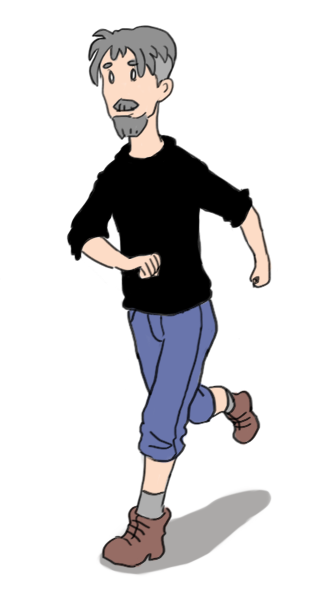
1. 今 本を 読んでいます。
2. Leeさんは くろい シャツを きています。
3. 私は バイクを 持もっています。
4. しゅくだいをしてから ゲームをします。
1. ゆっくり 📢:slowly, take time
2. きます2 📢:wear (used for tops)
3. はきます1 📢:wear (used for bottoms, shoes and socks)
4. かぶります1 📢:wear (used for hat and cap)
5. かけます2 📢:wear (used for glasses)
6. ズボン 📢:pants, trousers
7. スカート 📢:skirt
8. くつ 📢:shoes
9. くつした 📢:socks
10.ぼうし 📢:hat, cap
11.めがね 📢:glasses
12.ピンク 📢:pink
13.みどり 📢:green
14.グレー 📢:gray
15.知しります1 📢:know
16.持もちます1 📢:have, hold
て form
In lesson 18, we will study て form. ex.) 書きます→書いて
て form itself doesn’t have any meaning, but it will be a base of many sentence patterns. Conjugation of て form is the same as た form🥰
With て form, you can say below in Japanese.
– Now I am reading a book.
– Mr. Lee is wearing a black shirt.
– I have my motorbike.
– After I finish my homework, I will play game.
– Please change your password.(Lesson 19)
– Can I use this PC ? (Lesson 19)
– The window is opened.(Lesson 19)
Before we start studying how to use て form, let’s review how to make て form.
Group 3 verbs
コピーします ⇒ コピーして
きます ⇒ きて
Group 2 verbs
🚩しらべます ⇒ しらべて
🚩きます(wear), 見ます and できます are group 2 verbs
Group 1 verbs
1)Before ます is し
話します ⇒ 話して
2)🚩Before ます is い/ち/り
使います ⇒ 使って
かちます ⇒ かって
送ります ⇒ 送って
3)Before ます is き/ぎ
書きます ⇒ 書いて
いそぎます ⇒ いそいで
て form of 行きます is 行って, same as 2)👆
4)Before ます is に/び/み
しにます ⇒ しんで *しにます:die
とびます ⇒ とんで
読みます ⇒ 読んで
いそいで has a special usage below.
いそいで ごはんを 食べます。I eat meal in a hurry.
⇕
ゆっくり ごはんを 食べます。I take time to eat meal.
» Let’s make て forms. See ます form and make て form. Click 📢 to check your answer. Please pay attention to the accent.
1 はきます📢 2 かけます📢 3 かぶります📢 4 持ちます 📢 5 いそぎます📢 6 れんらくします📢 7 知ります📢 8 行きます📢
1. 【て form】います1
~て(で)います has some usages. Let’s start the first one.
The first one is used to describe the action what the subject is doing now.
今 本を 読んでいます。📢
Now I am reading a book.
今 is often used with ~ています.
In case you mention that the subject is not doing, you say
今 本を 読んでいません。📢 て form + いません
Now I am not reading a book.
In conversation, you say
ex.1) Q:今 本を 読んでいますか。📢
A:はい、読んでいます。📢
ex.2)🚩 Q:今 本を 読んでいますか。📢
A:いいえ、読んでいません。 📢
In case you are asked with group 3 verb, you can answer below for short.
ex.1) Q:今、ゲームをしていますか。📢
A:はい、しています。📢
ex.1) Q:今、ゲームをしていますか。📢
A:いいえ、していません。📢
います and あります aren’t used in this sentence pattern. You say below instead.
ex.1) ✖ 今 かいしゃに いています。
〇 今 かいしゃに います。
ex.2) 🚩✖ うちに パソコンが あっています。
〇 うちに パソコンが あります。
» Let’s talk about yourself and your friends.
1 今 私は( )います。
2 今( )さんは( )います。
2. 【て form】います2
Let’s describe this man. To describe cloth, shoes, etc., we use ~ています.

Leeさんは くろい シャツを きています。📢
Mr. Lee is wearing a black shirt.
First, let’s study some vocabulary of “wear”. Japanese has many words about it. See the image and say.
Here you don’t have to mention the color.
 |
1 シャツを きています。 |
 |
2 ズボンを はいています。 |
 |
3 スカートを はいています。 |
 |
4 くつを はいています。 |
 |
5 くつしたを はいています。 |
 |
6 ぼうしを かぶっています。 |
 |
🚩7 めがねを かけています。 |
Next, we will study colors. Here we study ピンク, みどり and グレー. These are nouns.
We’ve studied あかい, あおい, くろい andしろい. These are adjectives and can be changed to nouns.
Let’s see the usages.
🚩あかい, あおい, くろい, しろい (adjective) ex.) くろい シャツ
🚩あか, あお, くろ, しろ (noun) ex.) くろの シャツ
ピンク, みどり, グレー (noun) ex.) ピンクの シャツ
ピンク, みどり and グレー can’t be adjectives😅
» See the image and say following ex.). Do not forget to mention the color.
ex.)《John》さんは 〚くろい〛(ズボン) を【はいて】います。
1 《 》さんは〚 〛( )を【 】います。

1. Choose A/B.
|
1. Q:今 J-popを 聞いていますか。 A:(A はい B いいえ)、聞いていません。 |
|
2. Q:今 ほんやくしていますか。 A:はい、(A しています B します)。 |
|
3. Q:今 アニメを 見ていますか。 A:いいえ、(A 見ません B 見ていません)。 |
|
4. Q:今 コーヒーを のんでいますか。 A:(A はい B いいえ)、のんでいます。 |
2. See the image and choose A/B and C/D.
|
1.
グレーの(A シャツ B くつした)を (C きています D はいています)。 |
|
2.
(A しろ B ピンク)の シャツを (C はいています D きています)。 |
|
3.
ピンクの(A くつした B めがね)を (C かぶっています D かけています)。 |
|
4.
みどりの(A パンツ B ぼうし)を (C はいています D かぶっています)。 |
|
5.
(A グレー B あお)の くつを (C きています D はいています)。 |
» Before we start this section, let’s review how to make て form. See ます form and make て form. Click 📢 to check your answer. Please pay attention to the accent.
1 書きます📢 2 かぶります📢 3 見ます📢 4 のみます📢 5 話します📢
3. Special【て form】います。
There are some words which are usually used in て form + います. Let’s take a look.
3.1 持もっています
持ちます is usually used as 持っています.
🚩🚩私は バイクを 持っています。📢 I have my motorbike.
🚩私は バイクを 持っていません。📢 I don’t have my motorbike.
私は バイクを 持っています has the same meaning as 私は バイクがあります.
In conversation, 持っています/持っていません are used below.
ex.1) Q:バイクを 持っていますか。📢
A:はい、持っています。📢
ex.2) Q:バイクを 持っていますか。📢
A:いいえ、持っていません。📢
3.2 しごとをしています/べんきょうしています/使っています
To mention what you do everyday or almost everyday, you use ~ています.
私は K-Foodで しごとをしています。📢 I’m working at K-Food.
🚩毎日 日本語を べんきょうしています。📢 I study Japanese everyday.
私は 日本語の じしょを 使っています。📢 I use Japanese dictionary.
But be careful. You can use ~ています with 毎日.
But even though you do everyday, if you mention 今日, きのう, あした, etc., you don’t use ~ています.
きのう 私は 日本語を べんきょうしました。
🚩あした 私は 日本語を べんきょうします。
3.3 知しっています
知ります is also used as 知っています.
私は やまださんを 知っています。📢 I know Mr. Yamada.
Be careful in case you deny😮 It’s different from 持ちます and べんきょうします.
🚩私は やまださんを 知りません。 📢 I don’t know Mr. Yamada.
Do not say 知っていません😉
In conversation, you say
🚩ex.1) Q:やまださんを 知っていますか。📢
A:はい、知っています。📢
ex.2) Q:やまださんを 知っていますか。📢
A:いいえ、知りません。📢
» Click 📢 to hear the question, then answer with ~ています/~ていません/~ません.
3📢*See the image below and answer

4.【て form】から …。
In lesson 17, we studied しゅくだいをしたら ゲームを します.
Here we study て form + から to say the same.
しゅくだいをしてから ゲームをします。📢
After I finish my homework, I will play game.
Please pay attention to the position of から.
😇Now you know these 5 expressions below. Let’s review. They have almost the same meaning.
*Meaning : Do homework ⇒ Play game
しゅくだいをしてから、ゲームをします。
🚩しゅくだいをしたら ゲームをします。(Lesson 17)
🚩ゲームをする前に しゅくだいをします。(Lesson 14)
ゲームの前に しゅくだいをします。(Lesson 14)
🚩 しゅくだいをします。それから ゲームをします。(Lesson 5)
😎🤔😥😘
In case you say about something in the past, you say
きのう しゅくだいをしてから ゲームをしました。📢
» Fill in the blank and say following ex.).
ex.) (しゅくだいをして)から【アニメを 見ます】。
1 ( )から ごはんを 食べます。
2 ( )から かいしゃ/だいがくに 行きます。
3 コーヒーを のんでから【 】。
1. Choose A/B and C/D.
|
1. Q:タイ語を(A べんきょうしますか B べんきょうしていますか)。 A:いいえ、(C べんきょうしません D べんきょうしていません)。 |
|
2. Q:あの かいしゃを(A 知しっていますか B 知りますか)。 A:はい、(C 知っています D 知ります)。 |
|
3. Q:日本の ゲームを(A 持もちますか B 持っていますか)。 A:はい、(C 持ちます D 持っています)。 |
|
4. Q:たなかさんを(A 知りますか B 知っていますか)。 A:いいえ、(C 知りません D 知っていません)。 |
|
5. Q:毎日 この パソコンを(A 使っていますか B 使いますか)。 A:(C はい D いいえ)、使っていません。 |
2. See the schedule and answer True/False.
|
1.
日本語を べんきょうしてから アルバイトをします。 |
|
2. テレビを 見てから しゅくだいをします。 *See the schedule of question No.1 and answer |
|
3.
オンラインで かいぎをしてから うちに かえります。 *Answer button is above |
|
4. レポートを 書いてから チャットをします。 *See the schedule of question No.3 and answer |
|
5. Watさんの かいしゃに 行ってから うちに かえります。 *See the schedule of question No.3 and answer
|
|
1. 私は パソコン(A に B を)持っています。 |
|
2. くろい(A の B ✖)バイクを 持っています。 |
|
3. Watさんは めがね(A を B が)かけています。 |
|
4. 日本語(A を B に)べんきょうしています。 |
|
5. あか(A ✖ B の)スマホを 持っています。 |
|
1. おのさんは Linhさんを(A まっています B まちています)。 |
|
2. Johnさんは かん字を(A しらびています B しらべています)。 |
|
3. Anさんは かいしゃの サイトを(A 見んでいます B 見ています)。 |
|
4. 今 時間が(A あります B あっています)。 |
|
5. Q:おのさんを(A 知りますか B 知っていますか)。 A:はい、(C 知ります D 知っています)。 |
|
6. 私は 日本の カメラを(A 持っています B 持ちます)。 |
|
7. 私は かいぎの時間を(A 知っていません B 知りません)。 |
|
8. Surinさんは 日本語の じしょを(A 持ちません B 持っていません)。 |
|
9. あした 日本語を(A べんきょうします B べんきょうしています)。 |
|
10. Q:今 りょうりを 作っていますか。 A:いいえ、(A 作りません B 作っていません)。 |
|
1. シャツを きます。それから ぼうしを かぶります。 A シャツを きてから ぼうしを かぶります。 B ぼうしを かぶってから シャツを きます。 |
|
2. 本を 読んだら うちに かえります。 A うちに かえってから 本を 読みます。 B 本を 読みます。それから うちに かえります。 |
|
3. アニメを 見てから ごはんを 食べます。 A ごはんを 食べたら アニメを 見ます。 B ごはんを 食べる前に アニメを 見ます。 |
Read and answer True/False.
Daily life of Sara, Thanh and Wat
                                 今 Saraさんは インターネットで かん字の 書き方を しらべています。


                                Thanhさんは レポートを 書いています。


                                Thanhさんは 日本語と ベトナム語の じしょを 使いたいですが 持っていません。


                                Saraさんは ごぜん 5時から 8時まで アルバイトをしてから 日本語の クラスに 行きます。


 Watさんは めがねを かけています。


                                Watさんは ごぜん 9時から ごご 5時まで かいしゃで しごとをしています。


                                毎日 しごとが 終わってから 日本語を べんきょうしています。
|
1. Thanh has a Japanese-Vietnamese dictionary. |
|
2. Mr. Wat is working at a company. |
|
3. After Japanese class, Sara goes to her part time job. |
|
4. Thanh is writing his report. |
|
5. Mr. Wat doesn’t wear glasses. |
|
6. Sara is going to search how to write Kanji. |
|
7. After Mr. Wat finishes his task, he studies Japanese. |

X
X
Back to Review